|
5
min read
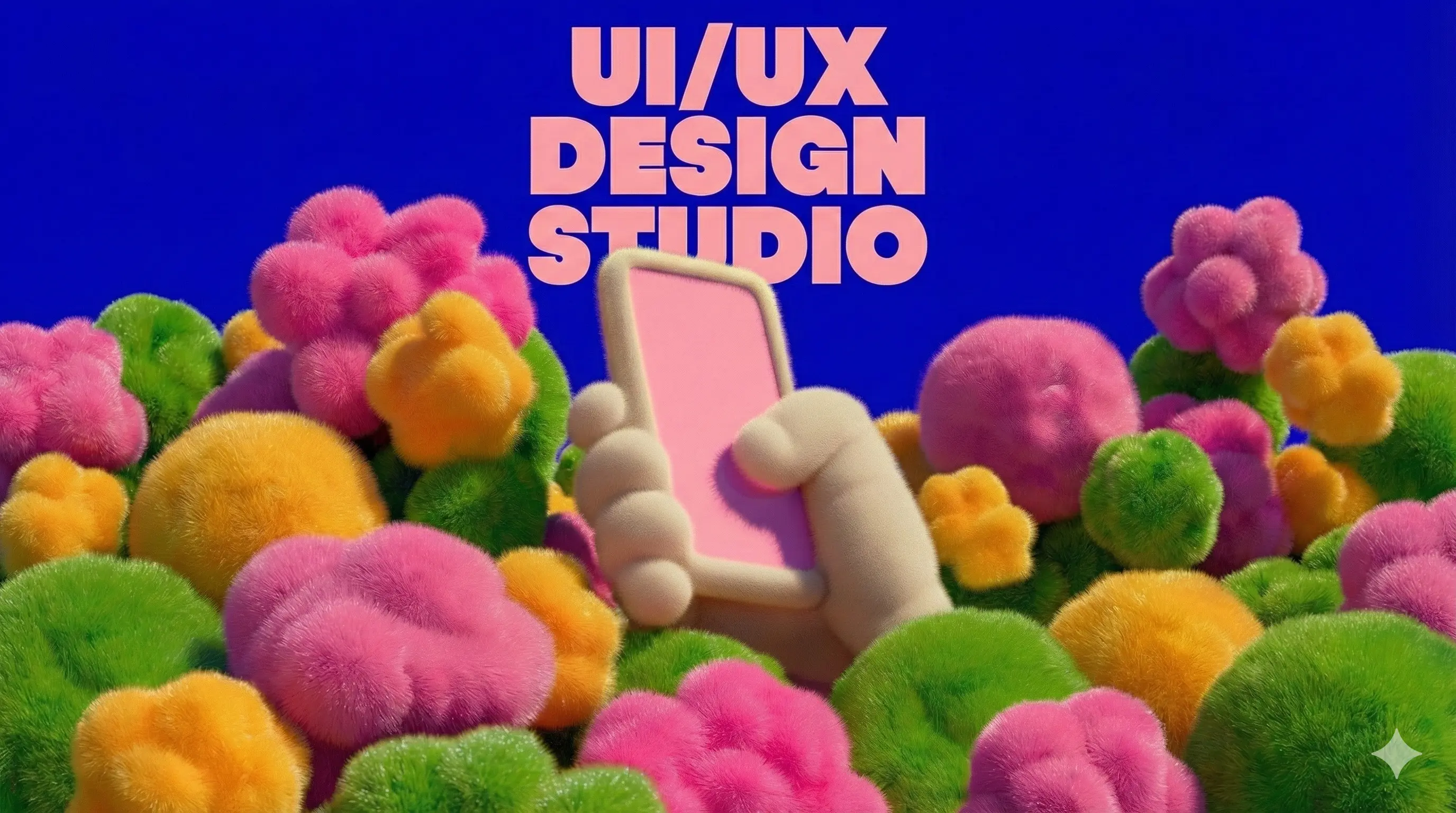
UI/UX Design Studio vs Agency: Which One Do You Actually Need?
For founders and product leaders, choosing an external design partner is a critical strategic decision. The market is saturated with providers, and the terminology is often confusing. Terms like "firm," "boutique," "studio," and "agency" are used interchangeably, blurring the lines between very different service models.
When you are looking to hire a UI/UX design agency or studio, the distinction is not just semantic. It reflects fundamental differences in team structure, operational focus, and the type of problems they are equipped to solve. A mismatch between your needs and your partner’s model can lead to friction, bloated budgets, and products that fail to resonate with users.
This article provides an analytical comparison of the UI/UX design studio versus the full-service design agency. By understanding the mechanics of each model, decision-makers can align their choice with their specific product stage and business goals, rather than relying on superficial labels.
Defining the Models
Before comparing them, it is necessary to establish clear definitions of what these entities typically are in the current market. While there are exceptions, these definitions cover the majority of professional providers.
What is a UI/UX Design Studio?
A UI/UX design studio is a specialized entity focused intently on the craft of digital product design. Their core competencies are narrow but deep: user research, experience strategy, interaction design, and interface design.
Structurally, studios tend to be smaller and flatter. The principals often remain hands-on with the work, and the team is composed almost entirely of senior-level specialists—designers, researchers, and strategists. They generally do not offer peripheral services like media buying, PR, or traditional advertising. Their primary output is the product itself—the software, app, or platform that users interact with daily.
What is a Design Agency?
A design agency, often referred to as a "full-service" or "digital" agency, is built for breadth and scale. They operate as a one-stop shop for a client’s digital and marketing needs. While they have UI/UX capabilities, design is typically one department alongside many others, such as marketing strategy, content production, SEO, social media management, and sometimes backend engineering.
Structurally, agencies are hierarchical and departmentalized. They are designed to handle large-volume accounts requiring coordination across multiple channels. Their primary output is often broader brand reach and campaign execution, of which the digital interface is one component.
UI/UX Design Studio vs Agency: Key Differences
The fundamental difference is focus: A studio optimizes for depth of craft in product experience, while an agency optimizes for breadth of service across brand channels.
Here is a side-by-side comparison of how these models typically operate:
Factor | UI/UX Design Studio | Design Agency |
Primary Focus | Product depth & UX craft | Breadth & marketing scale |
Team Structure | Specialized, senior, flat | Departmental, hierarchical |
Process | Iterative, product-led | Campaign / waterfall-driven |
Best Suited For | SaaS, apps, complex platforms | Large rollouts, campaigns |
Client Contact | Direct access to designers | Account / project managers |
When a UI/UX Design Studio Is the Right Choice
The studio model is best suited for scenarios where the success of the project hinges on complex user interactions, product logic, and specialized craft.
SaaS and Complex Digital Products
If you are building a B2B SaaS platform, a fintech application, or a complex data dashboard, the challenges are primarily functional, not promotional. You need a partner who understands information architecture, user flows, and how to reduce cognitive load. A studio provides the necessary specialization to tackle these deep usability challenges.
Minimum Viable Products (MVPs)
For startups or new corporate ventures, speed and validation are critical. Studios are often better equipped for the iterative nature of MVP development. They can move quickly from hypothesis to prototype to user testing, without the bureaucratic overhead that often comes with larger agency structures.
Deep Product Redesigns
When an existing product is failing to convert or retain users, it rarely needs a marketing veneer; it needs structural surgery. A studio approaches redesigns through a diagnostic lens—auditing the existing experience, conducting user research, and rebuilding the foundation based on data.
Interaction-Heavy Experiences
If the product requires unique, bespoke interactions—where the "feel" of the interface is a key differentiator—a studio is almost always the correct choice. Studios invest heavily in motion design and prototyping to ensure the tactile experience of the software aligns with the brand promise.
When a Design Agency Makes More Sense
The agency model excels when the challenge is organizational scale, integrated marketing, and high-volume production across diverse channels.
Enterprise Organizations Requiring Scale
Large global enterprises often need a partner who can handle hundreds of deliverables simultaneously across different regions and languages. A full-service agency has the infrastructure, project management layers, and staff volume to absorb this level of demand without breaking.
Multi-Channel Marketing Launches
If you are launching a new brand that requires a website alongside a Super Bowl ad, a social media campaign, and print collateral, an agency provides necessary centralization. They ensure visual and messaging consistency across disparate channels, managing the entire campaign ecosystem under one roof.
Campaign-Driven Work
For projects that are temporary or promotional in nature—such as microsites for events, marketing landing pages, or seasonal campaigns—an agency’s breadth is highly valuable. These projects often require rapid deployment across design, copy, and media teams, which agencies are structured to facilitate.
Cost and Engagement Models
Price is often the most confusing factor for buyers, as quotes can vary wildly between studios and agencies. Understanding the underlying models helps clarify the costs.
Why Studios May Appear Expensive
On an hourly or daily rate basis, a specialized UI/UX design studio often charges more than a generalist agency. This reflects the seniority of the talent. In a studio, you are typically paying for experienced practitioners who execute efficiently. In an agency, a lower blended rate often masks the fact that junior staff are doing the execution, supervised by seniors, which can lead to more hours billed for the same output.
In product design, cost rarely equals value. A higher-rate studio that solves a complex navigation issue in two weeks is ultimately cheaper than a lower-rate agency that spends two months building the wrong solution.
Engagement Models
Both agencies and studios use project-based pricing for defined scopes. However, for ongoing product work, their retainer models differ.
Agency retainers are often fundamentally "hours-banking" arrangements used for miscellaneous marketing tasks or maintenance across various departments. Studio retainers are typically structured around dedicated product squads—allocating a specific team (e.g., one lead designer, one researcher) to iterate on the product continuously, functioning like an extension of your internal team.
Common Misconceptions
Several myths cloud the decision-making process when choosing between these models.
Myth: "Studios are just small agencies."
This is incorrect. A studio is not defined by its headcount but by its focus. A five-person shop offering SEO, web design, and branding is a small agency. A twenty-person shop focusing solely on digital product interactions is a large studio. The difference is specialization vs. generalization.
Myth: "Agencies are safer because they are bigger."
Size does not guarantee stability or quality in product design. Large agencies often suffer from high staff turnover. You may hire the agency for its impressive capabilities deck, but your project's success depends entirely on the specific, often junior, team assigned to your account.
Myth: "One model is always cheaper."
Neither model is inherently cheaper. Agencies can be expensive due to high overhead and account management layers. Studios can be expensive due to specialized talent rates. The most cost-effective option is the one aligned with the problem; using a branding agency to design complex software is expensive because it is inefficient.
Conclusion
Deciding between a UI/UX design studio and a design agency is not about determining which business model is superior. It is about diagnosing your own needs accurately.
If your primary challenges are related to user behavior, product complexity, and interaction design, the specialized focus of a studio is likely required. If your challenges are related to market reach, integrated campaigns, and high-volume asset production across multiple channels, the breadth of an agency is the pragmatic choice.
The most successful partnerships are formed when the client looks beyond the label and selects the partner whose structure and expertise are purpose-built for the specific challenge at hand.
Share It On :